Charles Gounod
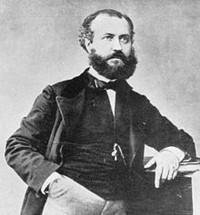
Charles-François Gounod (UK: GOO-noh, US: goo-NOH; French: [ʃaʁl fʁɑ̃swa ɡuno]; 17 June 1818 – 18 October 1893) was a French composer, conductor, and organist of the Romantic era. He wrote twelve operas, of which the most popular has always been Faust (1859); his Roméo et Juliette (1867) also remains in the international repertoire. He composed a large amount of church music, many songs, and popular short pieces including his "Ave Maria" (an elaboration of a Bach piece) and "Funeral March of a Marionette".
Born in Paris into an artistic and musical family, Gounod was a student at the Conservatoire de Paris and won France's most prestigious musical prize, the Prix de Rome. His studies took him to Italy, Austria and then Prussia, where he met Felix Mendelssohn, whose advocacy of the music of Bach was an early influence on him. He was deeply religious, and after his return to Paris, he briefly considered becoming a priest. He composed prolifically, writing church music, songs, orchestral music and operas.
Gounod's career was disrupted by the Franco-Prussian War. He moved to England with his family for refuge from the Prussian advance on Paris in 1870. After peace was restored in 1871 his family returned to Paris but he remained in London, living in the house of an amateur singer, Georgina Weldon, who became the controlling figure in his life. After nearly three years he broke away from her and returned to his family in France. His absence, and the appearance of younger French composers, meant that he was no longer at the forefront of French musical life; although he remained a respected figure he was regarded as old-fashioned during his later years, and operatic success eluded him. He died at his house in Saint-Cloud, near Paris, at the age of 75.
Few of Gounod's works remain in the regular international repertoire, but his influence on later French composers was considerable. In his music there is a strand of romantic sentiment that is continued in the operas of Jules Massenet and others; there is also a strand of classical restraint and elegance that influenced Gabriel Fauré. Claude Debussy wrote that Gounod represented the essential French sensibility of his time.
-
Mozart: Clarinet Concerto in A Major, K. 622: I. Allegro - Focus on the Clarinet - An Essential Classical Stopover -
Charles Gounod
-
Mozart: Clarinet Concerto in A Major, K. 622: II. Adagio - Focus on the Clarinet - An Essential Classical Stopover -
Charles Gounod
-
Mozart: Clarinet Concerto in A Major, K. 622: III. Rondo. Allegro - Focus on the Clarinet - An Essential Classical Stopover -
Charles Gounod
-
Berg: 4 Pieces for Clarinet and Piano, Op. 5: No. 1, Mäßig (Live, 2002) - Focus on the Clarinet - An Essential Classical Stopover -
Charles Gounod
-
Milhaud: Clarinet Sonatina, Op. 100: I. Très rude - Focus on the Clarinet - An Essential Classical Stopover -
Charles Gounod
-
Hindemith: Clarinet Sonata: IV. Kleines Rondo, gemächlich - Focus on the Clarinet - An Essential Classical Stopover -
Charles Gounod
-
Rossini: Introduction, Theme and Variations for Clarinet and Orchestra: Introduction - Focus on the Clarinet - An Essential Classical Stopover -
Charles Gounod
-
Gould: Derivations: I. Warm-Up - Focus on the Clarinet - An Essential Classical Stopover -
Charles Gounod
-
Copland: Clarinet Concerto - Focus on the Clarinet - An Essential Classical Stopover -
Charles Gounod
-
Gershwin: Porgy and Bess, Act 1: "Summertime" (Orch. Bühl) - Focus on the Clarinet - An Essential Classical Stopover -
Charles Gounod
-
Weber: Clarinet Concerto No. 1 in F Minor, Op. 73, J. 114: I. Allegro - Focus on the Clarinet - An Essential Classical Stopover -
Charles Gounod
-
Weber: Clarinet Concerto No. 1 in F Minor, Op. 73, J. 114: II. Adagio, ma non troppo - Focus on the Clarinet - An Essential Classical Stopover -
Charles Gounod
-
Weber: Clarinet Concerto No. 1 in F Minor, Op. 73, J. 114: III. Rondo. Allegretto - Focus on the Clarinet - An Essential Classical Stopover -
Charles Gounod
-
Debussy: Première rapsodie pour clarinette, CD 124, L. 116 - Focus on the Clarinet - An Essential Classical Stopover -
Charles Gounod
-
Poulenc: Clarinet Sonata, FP 184: I. Allegro tristamente - Focus on the Clarinet - An Essential Classical Stopover -
Charles Gounod
-
Poulenc: Clarinet Sonata, FP 184: II. Romanza - Focus on the Clarinet - An Essential Classical Stopover -
Charles Gounod
-
Poulenc: Clarinet Sonata, FP 184: III. Allegro con fuoco - Focus on the Clarinet - An Essential Classical Stopover -
Charles Gounod
-
Schubert: Schwanengesang, D. 957: No. 4, Ständchen (Arr. Lenaerts & Grammenos for Clarinet and Harp) - Focus on the Clarinet - An Essential Classical Stopover -
Charles Gounod
-
Schubert: Sonata in A Minor, D. 821 "Arpeggione": I. Allegro moderato (Arr. Lenaerts & Grammenos for Clarinet and Harp) - Focus on the Clarinet - An Essential Classical Stopover -
Charles Gounod
-
Françaix: Tema con variazioni: Tema. Largo - Moderato - Focus on the Clarinet - An Essential Classical Stopover -
Charles Gounod
-
Françaix: Tema con variazioni: Variation I. Larghetto misterioso - Focus on the Clarinet - An Essential Classical Stopover -
Charles Gounod
-
Françaix: Tema con variazioni: Variation II. Presto - Focus on the Clarinet - An Essential Classical Stopover -
Charles Gounod
-
Françaix: Tema con variazioni: Variation III. Moderato - Focus on the Clarinet - An Essential Classical Stopover -
Charles Gounod
-
Françaix: Tema con variazioni: Variation IV. Adagio - Focus on the Clarinet - An Essential Classical Stopover -
Charles Gounod
-
Françaix: Tema con variazioni: Variation V. Tempo di valzer - Focus on the Clarinet - An Essential Classical Stopover -
Charles Gounod
-
Françaix: Tema con variazioni: Cadence - Focus on the Clarinet - An Essential Classical Stopover -
Charles Gounod
-
Françaix: Tema con variazioni: Variation VI. Prestissimo - Focus on the Clarinet - An Essential Classical Stopover -
Charles Gounod
-
Krommer: Clarinet Concerto in E-Flat Major, Op. 36: III. Allegro moderato - Focus on the Clarinet - An Essential Classical Stopover -
Charles Gounod
-
Bach, CPE: Duet for Clarinets in C Major, Wq. 142: I. Adagio e sostenuto - Focus on the Clarinet - An Essential Classical Stopover -
Charles Gounod
-
Mozart: Clarinet Quintet in A Major, K. 581 "Stadler": I. Allegro - Focus on the Clarinet - An Essential Classical Stopover -
Charles Gounod
-
Mozart: Clarinet Quintet in A Major, K. 581 "Stadler": II. Larghetto - Focus on the Clarinet - An Essential Classical Stopover -
Charles Gounod
-
Mozart: Clarinet Quintet in A Major, K. 581 "Stadler": III. Menuetto - Focus on the Clarinet - An Essential Classical Stopover -
Charles Gounod
-
Mozart: Clarinet Quintet in A Major, K. 581 "Stadler": IV. Allegretto con variazioni - Focus on the Clarinet - An Essential Classical Stopover -
Charles Gounod
-
Gounod & Bach: Ave Maria (Version for Clarinet and Piano) - Focus on the Clarinet - An Essential Classical Stopover -
Charles Gounod
-
Penderecki: Clarinet Concerto: I. Andante - Focus on the Clarinet - An Essential Classical Stopover -
Charles Gounod
-
Penderecki: Clarinet Concerto: II. Più mosso - Focus on the Clarinet - An Essential Classical Stopover -
Charles Gounod
-
Penderecki: Clarinet Concerto: III. Andante - Focus on the Clarinet - An Essential Classical Stopover -
Charles Gounod
-
Penderecki: Clarinet Concerto: IV. Allegro con brio - Focus on the Clarinet - An Essential Classical Stopover -
Charles Gounod
-
Penderecki: Clarinet Concerto: V. Adagio - Focus on the Clarinet - An Essential Classical Stopover -
Charles Gounod
-
Penderecki: Clarinet Concerto: VI. Vivace - Focus on the Clarinet - An Essential Classical Stopover -
Charles Gounod
-
Arnold: Clarinet Concerto No. 2, Op. 115: III. The Pre-Goodman Rag. Allegro non troppo - Focus on the Clarinet - An Essential Classical Stopover -
Charles Gounod
-
Bruch: Concerto for Clarinet and Viola in E Minor, Op. 88: I. Andante con moto - Focus on the Clarinet - An Essential Classical Stopover -
Charles Gounod
-
Stravinsky: 3 Pieces for Solo Clarinet: No. 1, Sempre e molto tranquillo - Focus on the Clarinet - An Essential Classical Stopover -
Charles Gounod
-
Stravinsky: 3 Pieces for Solo Clarinet: No. 2 - Focus on the Clarinet - An Essential Classical Stopover -
Charles Gounod
-
Shaw: Clarinet Concerto - Focus on the Clarinet - An Essential Classical Stopover -
Charles Gounod
-
Puccini: Tosca, Act 3: "E lucevan le stelle" (Transcr. Mc. Learnon for Clarinet and Piano) - Focus on the Clarinet - An Essential Classical Stopover -
Charles Gounod
-
Hindemith: Clarinet Sonata: I. Mäßig bewegt - Langsamer, ruhig - Focus on the Clarinet - An Essential Classical Stopover -
Charles Gounod
-
Lutosławski: Dance Preludes for Clarinet and Chamber Orchestra: No. 1, Allegro molto - Focus on the Clarinet - An Essential Classical Stopover -
Charles Gounod
-
Penderecki: 3 Miniatures for Clarinet and Piano: No. 1, Allegro - Focus on the Clarinet - An Essential Classical Stopover -
Charles Gounod
-
Brahms: Clarinet Sonata No. 1 in F Minor, Op. 120 No. 1: I. Allegro appassionato - Focus on the Clarinet - An Essential Classical Stopover -
Charles Gounod
-
Rautavaara: Sonetto per clarinetto e pianoforte, Op. 53 - Focus on the Clarinet - An Essential Classical Stopover -
Charles Gounod
-
Tchaikovsky: The Nutcracker, Op. 71: Miniature Overture - The 100 Greatest Pieces of Classical Music -
Charles Gounod
-
Tchaikovsky: The Nutcracker, Op. 71, Act 2: No. 14c, Pas de deux. Variation II "Dance of the Sugar Plum Fairy" - The 100 Greatest Pieces of Classical Music -
Charles Gounod
-
Dvořák: 8 Slavonic Dances, Op. 46, B. 83: No. 8 in G Minor - The 100 Greatest Pieces of Classical Music -
Charles Gounod
-
Wagner: Die Walküre, Act 3: Walkürenritt - The 100 Greatest Pieces of Classical Music -
Charles Gounod
-
Schumann: Symphony No. 4 in D Minor, Op. 120: II. Romanze. Ziemlich langsam - The 100 Greatest Pieces of Classical Music -
Charles Gounod
-
Satie: 3 Gymnopédies: No. 3, Lent et grave (Orch. Debussy) - The 100 Greatest Pieces of Classical Music -
Charles Gounod
-
Mozart: Ave verum corpus, K. 618 - The 100 Greatest Pieces of Classical Music -
Charles Gounod
-
Berlioz: La damnation de Faust, Op. 24, H 111: Marche hongroise - The 100 Greatest Pieces of Classical Music -
Charles Gounod
-
Grieg: Peer Gynt, Op. 23, Act 2: No. 7, In the Hall of the Mountain King - The 100 Greatest Pieces of Classical Music -
Charles Gounod
-
Wagner: Lohengrin, Act 3: Prelude - The 100 Greatest Pieces of Classical Music -
Charles Gounod
-
Ravel: Ma mère l'Oye, M. 62: III. Pavane de la Belle au bois dormant - The 100 Greatest Pieces of Classical Music -
Charles Gounod
-
Beethoven: Triple Concerto in C Major, Op. 56: II. Largo - The 100 Greatest Pieces of Classical Music -
Charles Gounod
-
Elgar: 5 Pomp and Circumstance Marches, Op. 39: No. 4 in G Major - The 100 Greatest Pieces of Classical Music -
Charles Gounod
-
Dvořák: 8 Slavonic Dances, Op. 72, B. 147: No. 12 in D Major - The 100 Greatest Pieces of Classical Music -
Charles Gounod
-
Dvořák: 8 Slavonic Dances, Op. 72, B. 147: No. 13 in B-Flat Minor - The 100 Greatest Pieces of Classical Music -
Charles Gounod
-
Glazunov: Violin Concerto in A Minor, Op. 82: I. Moderato - The 100 Greatest Pieces of Classical Music -
Charles Gounod
-
Tchaikovsky: Eugene Onegin, Op. 24, Act 3: Polonaise - The 100 Greatest Pieces of Classical Music -
Charles Gounod
-
Mozart: Divertimento in D Major, K. 136 "Salzburg Symphony No. 1": III. Presto - The 100 Greatest Pieces of Classical Music -
Charles Gounod
-
Mozart: Flute Concerto No. 2 in D Major, K. 314: II. Andante ma non troppo - The 100 Greatest Pieces of Classical Music -
Charles Gounod
-
Grieg: Peer Gynt, Op. 23, Act 4: No. 16, Anitra's Dance - The 100 Greatest Pieces of Classical Music -
Charles Gounod
-
Grieg: Peer Gynt, Op. 23, Act 4: No. 20, Peer Gynt at the Statue of Memnon - The 100 Greatest Pieces of Classical Music -
Charles Gounod
-
Grieg: Peer Gynt, Op. 23, Act 5: No. 21, Prelude. Peer Gynt's Homecoming - The 100 Greatest Pieces of Classical Music -
Charles Gounod
-
Mozart: Clarinet Concerto in A Major, K. 622: II. Adagio - The 100 Greatest Pieces of Classical Music -
Charles Gounod
-
Vivaldi: Trumpet Concerto in A-Flat Major: I. Allegro (Orch. Thilde After Violon Sonata, RV 20) - The 100 Greatest Pieces of Classical Music -
Charles Gounod
-
Mozart: 3 German Dances, K. 605: No. 3 in C Major "Die Schlittenfahrt" - The 100 Greatest Pieces of Classical Music -
Charles Gounod
-
Gounod: Faust, Act 5: Ballet "La nuit de Walpurgis": III. Danse antique. Allegretto - The 100 Greatest Pieces of Classical Music -
Charles Gounod
-
Gounod: Faust, Act 5: Ballet "La nuit de Walpurgis": V. Les Troyennes. Moderato con moto - The 100 Greatest Pieces of Classical Music -
Charles Gounod
-
Grieg: Peer Gynt, Op. 23, Act 2: No. 8, Dance of the Mountain King's Daughter - The 100 Greatest Pieces of Classical Music -
Charles Gounod
-
Grieg: Peer Gynt, Op. 23, Act 3: No. 12, The Death of Åse - The 100 Greatest Pieces of Classical Music -
Charles Gounod
-
Handel: Water Music, Suite No. 1 in F Major, HWV 348: VIII. Hornpipe - The 100 Greatest Pieces of Classical Music -
Charles Gounod
-
Handel: Water Music, Suite No. 2 in D Major, HWV 349: II. Alla Hornpipe - The 100 Greatest Pieces of Classical Music -
Charles Gounod
-
Bizet: Carmen, WD 31: Prélude - The 100 Greatest Pieces of Classical Music -
Charles Gounod
-
Strauss II, J: Tritsch-Tratsch-Polka, Op. 214 - The 100 Greatest Pieces of Classical Music -
Charles Gounod
-
Brahms: Variations on a Theme by Haydn, Op. 56a "St. Antoni Chorale": Theme. Andante - The 100 Greatest Pieces of Classical Music -
Charles Gounod
-
Brahms: Variations on a Theme by Haydn, Op. 56a "St. Antoni Chorale": Variation I. Poco più animato - The 100 Greatest Pieces of Classical Music -
Charles Gounod
-
Brahms: Variations on a Theme by Haydn, Op. 56a "St. Antoni Chorale": Variation II. Più vivace - The 100 Greatest Pieces of Classical Music -
Charles Gounod
-
Mozart: Violin Concerto No. 1 in B-Flat Major, K. 207: III. Presto - The 100 Greatest Pieces of Classical Music -
Charles Gounod
-
Beethoven: Fidelio, Op. 72, Act 1: March - The 100 Greatest Pieces of Classical Music -
Charles Gounod
-
Mussorgsky: Pictures at an Exhibition: III. Tuileries (Orch. Ravel, M. A 24) - The 100 Greatest Pieces of Classical Music -
Charles Gounod
-
Mussorgsky: Pictures at an Exhibition: V. Ballet of the Unhatched Chicks (Orch. Ravel, M. A 24) - The 100 Greatest Pieces of Classical Music -
Charles Gounod
-
Tchaikovsky: The Nutcracker, Op. 71, Act 2: No. 12a, Divertissement. Chocolate, Spanish Dance - The 100 Greatest Pieces of Classical Music -
Charles Gounod
-
Tchaikovsky: The Nutcracker, Op. 71, Act 2: No. 12b, Divertissement. Coffee, Arabian Dance - The 100 Greatest Pieces of Classical Music -
Charles Gounod
-
Tchaikovsky: The Nutcracker, Op. 71, Act 2: No. 12e, Divertissement. Dance of the Reed-Flutes - The 100 Greatest Pieces of Classical Music -
Charles Gounod
-
Mozart: Così fan tutte, K. 588, Act 1: "Soave sia il vento" (Fiordiligi, Dorabella, Don Alfonso) - The 100 Greatest Pieces of Classical Music -
Charles Gounod
-
Mozart: Piano Concerto No. 20 in D Minor, K. 466: III. Allegro assai - The 100 Greatest Pieces of Classical Music -
Charles Gounod
-
Mozart: Requiem in D Minor, K. 626: I. Introitus - The 100 Greatest Pieces of Classical Music -
Charles Gounod
-
Mozart: Requiem in D Minor, K. 626: III. Dies irae - The 100 Greatest Pieces of Classical Music -
Charles Gounod
-
Schumann: Symphony No. 3 in E-Flat Major, Op. 97 "Rhenish": III. Nicht schnell - The 100 Greatest Pieces of Classical Music -
Charles Gounod
-
Gounod: Faust, Act 5: Ballet "La nuit de Walpurgis": I. Les Nubiennes. Allegretto - The 100 Greatest Pieces of Classical Music -
Charles Gounod
-
Debussy: Préludes, Livre II, CD 131, L. 123: No. 2, Feuilles mortes (Orch. Matthews) - The 100 Greatest Pieces of Classical Music -
Charles Gounod
-
Bach: Orchestral Suite No. 3 in D Major, BWV 1068: Air (Version for Violin and Orchestra) - The 100 Greatest Pieces of Classical Music -
Charles Gounod
-
Purcell: The Fairy Queen, Z. 629, Masque of The Four Seasons: Entry of Phoebus - Hymn to the Sun -
Charles Gounod
-
Bartók: For Children, Sz. 42, Book I "Hungarian Folk Songs": No. 2, Sunrise. Andante - Hymn to the Sun -
Charles Gounod
-
Satie: Heures séculaires et instantanées: No. 2, Crépuscule matinal (de midi) - Hymn to the Sun -
Charles Gounod
-
Sibelius: 3 Songs for American Schools: No. 2, The Sun upon the Lake Is Low - Hymn to the Sun -
Charles Gounod
-
Copland: The Tender Land, Act 3, Scene 2: Daybreak - Hymn to the Sun -
Charles Gounod
-
Stravinsky: Le Rossignol, Act II: "Ah coucher du soleil" (Les Envoyés japonais) - Hymn to the Sun -
Charles Gounod
-
Britten: Six Metamorphoses After Ovid, Op. 49: No. 2, Phaeton. Vivace ritmico - Hymn to the Sun -
Charles Gounod
-
Scarlatti, A: Clori e Mirtillo: VIII. Duo. "Sin che il sole spande i rai" - Hymn to the Sun -
Charles Gounod
-
Massenet: Année passée, Livre I "Après-midi d'été": III. Grand soleil. Avec ampleur - Hymn to the Sun -
Charles Gounod
-
Holst: The Wandering Scholar, Op. 50: "He'll Lie All Day in the Sun" (Louis, Pierre, Alison) - Hymn to the Sun -
Charles Gounod
-
Palmgren: Sun and Clouds, Op. 102: No. 5, May's Sun Smiles - Hymn to the Sun -
Charles Gounod
-
Schumann: 6 Gedichte, Op. 36: No. 4, An den Sonnenschein - Hymn to the Sun -
Charles Gounod
-
Sauguet: Tableaux de Paris: VIII. Coucher de soleil sur l'Arc de Triomphe - Hymn to the Sun -
Charles Gounod
-
Lincke: Frau Luna, Act 2: "Wenn die Sonne schlafen geht" (Sternschnuppe, Luna) - Hymn to the Sun -
Charles Gounod
-
Couperin, F: Quatrième Livre de pièces de clavecin, Vingt-deuxième Ordre: II. Le Point du jour, Allemande - Hymn to the Sun -
Charles Gounod
-
Schwarz-Schilling: Der wandernde Musikant: No. 2, Wenn die Sonne lieblich schiene - Hymn to the Sun -
Charles Gounod
-
Ponchielli: La Gioconda, Op. 9, Act 3: Danza delle ore. Le ore dell'aurora - "Prodigio!" (Coro) - Hymn to the Sun -
Charles Gounod
-
Weber: 4 Songs by Duke Leopold August of Gotha: No. 4, Beim kindlichen Strahl des erwachenden Phoibos, J. 153 - Hymn to the Sun -
Charles Gounod
-
Chopin: 12 Études, Op. 10: No. 8 in F Major - Hymn to the Sun -
Charles Gounod
-
Albinoni: Il nascimento dell'aurora: Aria. "Bella è l'alba" (Zeffiro) - Hymn to the Sun -
Charles Gounod
-
Grigny: Livre d'orgue, Hymne "A solis ortus": III. Trio - Foeno jacere pertulit - Hymn to the Sun -
Charles Gounod
-
Loewe: 6 Hebräische Gesänge, Op. 13: No. 6, Die Sonne der Schlaflosen - Hymn to the Sun -
Charles Gounod
-
Jobim: Estrada do sol (Arr. Barbosa-Lima for Guitar) - Hymn to the Sun -
Charles Gounod
-
Beethoven: 22 Scottish Songs, WoO 156: No. 6, Red Gleams the Sun on Yon Hill Tap - Hymn to the Sun -
Charles Gounod
-
Fibich: At Twilight, Op. 39 "Poem" (Version for Trumpet and Piano) - Hymn to the Sun -
Charles Gounod
-
Bach, JS: Christ lag in Todes Banden, BWV 4: No. 7, Duett. "So feiern wir das hohe Fest" - Hymn to the Sun -
Charles Gounod
-
Boulanger, N: Soleils couchants - Hymn to the Sun -
Charles Gounod
-
Dowland: The Third and Last Booke of Songs or Ayres: No. 6, When Phoebus First Did Daphne Love - Hymn to the Sun -
Charles Gounod
-
Grappelli: Aurore - Hymn to the Sun -
Charles Gounod
-
Merikanto: 2 Songs, Op. 24: No. 1, When the Sun Shines - Hymn to the Sun -
Charles Gounod
-
Elgar: The Wand of Youth, Suite No. 1, Op. 1a: IV. Sun Dance - Hymn to the Sun -
Charles Gounod
-
Bizet: Les pêcheurs de perles, WD 13, Act 3: Chœur dansé. "Dès que le soleil" (Chœur) - Hymn to the Sun -
Charles Gounod
-
Softly as in a Morning Sunrise - Hymn to the Sun -
Charles Gounod
-
Rachmaninov: 12 Romances, Op. 21: No. 3, Twilight - Hymn to the Sun -
Charles Gounod
-
Delibes: Coppélia, Act 3: No. 20b, Fête de la cloche. L'aurore - Hymn to the Sun -
Charles Gounod
-
Madetoja: 9 Songs for Male Choir, Op. 23: No. 9, Dusk - Hymn to the Sun -
Charles Gounod
-
Birtwistle: Pulse Shadows: II. Thread Suns - Hymn to the Sun -
Charles Gounod
-
Caldara: Come raggio di sol - Hymn to the Sun -
Charles Gounod
-
Vivaldi: Bassoon Concerto in B-Flat Major, RV 501 "La notte": V. Sorge l'aurora. Allegro - Hymn to the Sun -
Charles Gounod
-
Wolf: 4 Gedichte nach Heine, Shakespeare und Byron: No. 3, Sonne der Schlummerlosen - Hymn to the Sun -
Charles Gounod
-
Hannikainen: 5 Piano Pieces, Op. 20: No. 3, Twilight Sound - Hymn to the Sun -
Charles Gounod
-
Lully: Phaëton, LWV 61, Act 4: "C'est par vous, ô Soleil, que le ciel s'illumine" (L'Automne) - Hymn to the Sun -
Charles Gounod
-
Gubaidulina: The Canticle of the Sun: II. — - Hymn to the Sun -
Charles Gounod
-
Fauré: La chanson d'Ève, Op. 95: No. 9, Crépuscule - Hymn to the Sun -
Charles Gounod
-
Tchaikovsky: The Seasons, Op. 37a: No. 8, August. The Harvest - Hymn to the Sun -
Charles Gounod
-
Santoliquido: I canti della sera: No. 3, Tristezza crepuscolare (Live) - Hymn to the Sun -
Charles Gounod
-
Takemitsu: All in Twilight: No. 2 - Hymn to the Sun -
Charles Gounod
-
Sullivan: The Mikado or The Town of Titipu, Act 2: Song. "The Sun, Whose Rays Are All Ablaze" (Yum-Yum) - Hymn to the Sun -
Charles Gounod
-
Gibbs: Fancy Dress, Op. 82: III. Dusk (Orch. Wilbur) - Hymn to the Sun -
Charles Gounod
-
Donizetti: Lucia di Lammermoor, Act 3: "O sole più rapido" (Edgardo, Enrico) - Hymn to the Sun -
Charles Gounod
-
Sallinen: Sunrise Serenade, Op. 63 - Hymn to the Sun -
Charles Gounod
-
Schubert: An die Sonne, D. 439 - Hymn to the Sun -
Charles Gounod
-
Chabrier: Petite valse - Refreshing Classics -
Charles Gounod
-
Beethoven: 7 Variations on "Bei Männern, welche Liebe fühlen" from The Magic Flute in E-Flat Major, WoO 46: Variation II - Refreshing Classics -
Charles Gounod
-
Kabalevsky: 30 Pieces for Children, Op. 27: No. 2, Little Song - Refreshing Classics -
Charles Gounod
-
Weill: Johnny Johnson, Act 2: Johnny's Dream (Minnie Belle) - Refreshing Classics -
Charles Gounod
-
Mussorgsky: Memories of Childhood: I. Nurse and I - Refreshing Classics -
Charles Gounod
-
Geminiani: Cello Sonata in D Minor, Op. 5 No. 2: III. Adagio - Refreshing Classics -
Charles Gounod
-
Schumann: Davidsbündlertänze, Op. 6, Heft II: No. 15, Frisch - Refreshing Classics -
Charles Gounod
-
Sor: Les deux amis, Op. 41: Variation I - Refreshing Classics -
Charles Gounod
-
Grieg: Lyric Pieces, Book I, Op. 12: No. 7, Album Leaf - Refreshing Classics -
Charles Gounod
-
Satie: Mercure, Tableau II: Bain des Grâces - Refreshing Classics -
Charles Gounod
-
Khachaturian: Children's Album, Book I, Op. 62: No. 1, Andantino - Refreshing Classics -
Charles Gounod
-
Traditional: L'eau de source (Choral Arr. Richards) - Refreshing Classics -
Charles Gounod
-
Nielsen: Humoresque-Bagatelles, Op. 11: No. 3, A Little Slow Waltz - Refreshing Classics -
Charles Gounod
-
Torelli: Concerto for Strings in G Major, Op. 6 No. 1: IV. Allegro - Refreshing Classics -
Charles Gounod
-
Tveitt: 50 Folk-Tunes from Hardanger, Op. 150: No. 27, Langeleik Tune - Refreshing Classics -
Charles Gounod
-
Lotti: Alessandro Severo: Sinfonia: II. — - Refreshing Classics -
Charles Gounod
-
Wagner: Elegie - Refreshing Classics -
Charles Gounod
-
Dall'Abaco: Concerti a più istrumenti, Op. 5: Concerto No. 6 in D Major: II. Aria - Refreshing Classics -
Charles Gounod
-
Wiéner: Histoires sans paroles: No. 9, Bucolique - Refreshing Classics -
Charles Gounod
-
Pierné: 15 Pièces, Op. 3: No. 5, Coquetterie - Refreshing Classics -
Charles Gounod
-
Parry: English Lyrics, Set No. 5: No. 2, Proud Maisie Is in the Wood - Refreshing Classics -
Charles Gounod
-
Prokofiev: Music for Children, Op. 65: No. 6, Waltz - Refreshing Classics -
Charles Gounod
-
Biber: Sonata representativa: I. Allegro - Refreshing Classics -
Charles Gounod
-
Smetana: 3 Salon Polkas, Op. 7: No. 3 in E Major - Refreshing Classics -
Charles Gounod
-
Marais: Pièces en trio: Suite No. 1 en do majeur: VIII. Rondeau - Refreshing Classics -
Charles Gounod
-
Fauré: Pièces brèves, Op. 84: No. 8, Nocturne No. 8 in D-Flat Major - Refreshing Classics -
Charles Gounod
-
Shostakovich: 24 Preludes, Op. 34: No. 19 in E-Flat Major, Andantino (Arr. Tsyganov for Violin and Piano) - Refreshing Classics -
Charles Gounod
-
Le Flem: Le chant des genêts: No. 2, Vers le soir - Refreshing Classics -
Charles Gounod
-
Caplet: 2 Petites pièces: No. 2, Petite valse. Vivo - Refreshing Classics -
Charles Gounod
-
Milhaud: Fontaines et sources, Op. 352: No. 3, La grande cascade de Gavarnie - Refreshing Classics -
Charles Gounod
-
Moszkowski: 6 Klavierstücke, Op. 15: No. 1, Serenata - Refreshing Classics -
Charles Gounod
-
Schubert: Frisch atmet des Morgens lebendiger Hauch, D. 67 - Refreshing Classics -
Charles Gounod
-
Borodin: Petite suite: V. Rêverie. Andante - Refreshing Classics -
Charles Gounod
-
Sibelius: 4 Pieces for Cello and Piano, Op. 78: No. 1, Impromptu - Refreshing Classics -
Charles Gounod
-
Copland: 4 Piano Blues: No. 2, Soft and Languid - Refreshing Classics -
Charles Gounod
-
Rameau: Zéphyre: Menuets - Refreshing Classics -
Charles Gounod
-
Martinů: Puppets, Book I: No. 1, Columbine Dances - Refreshing Classics -
Charles Gounod
-
Schein: Der kühle Maien - Refreshing Classics -
Charles Gounod
-
Britten: Holiday Diary, Op. 5: I. Early Morning Bathe - Refreshing Classics -
Charles Gounod
-
Mendelssohn-Hensel: 6 Lieder, Op. 9: No. 6, Die Mainacht (Version for Flute and Piano) - Refreshing Classics -
Charles Gounod
-
Arensky: Scherzo in A Major, Op. 8 - Refreshing Classics -
Charles Gounod
-
Gershwin: 3 Preludes: No. 1, Allegro ben ritmato e deciso (Arr. Henri for Accordion & Double Bass) - Refreshing Classics -
Charles Gounod
-
Villa-Lobos: A prole do bebê No. 1, W. 140: III. Caboclinha "A boneca de barro" - Refreshing Classics -
Charles Gounod
-
Vaughan Williams: Rolling in the Dew - Refreshing Classics -
Charles Gounod
-
Rosetti: Symphony in C Major, Kaul I:21: II. Menuetto fresco - Trio - Menuetto - Refreshing Classics -
Charles Gounod
-
Walton: 5 Bagatelles: No. 4, Lento - Refreshing Classics -
Charles Gounod
-
Françaix: Petit quatuor: II. Cantilène (Arr. Schottstädt for Clarinets and Basset Horn) - Refreshing Classics -
Charles Gounod
-
Scriabin: 2 Impromptus, Op. 14: No. 1 in B Major - Refreshing Classics -
Charles Gounod
-
Rodrigo: 4 Madrigales amatorios: No. 4, De los álamos vengo, madre - Refreshing Classics -
Charles Gounod
-
Strauss, R: Der Bürger als Edelmann Suite, Op. 60-IIIa: V. Das Menuett des Lully - Refreshing Classics -
Charles Gounod
-
Dvořák: Humoresques, Op. 101, B. 187: No. 7, Poco lento e grazioso - Refreshing Classics -
Charles Gounod
-
Messager: Véronique, Act 1: Chœur. "Quelle fraîcheur délicieuse !" - Couplets. "Le bel état que celui de fleuriste" (Chœur, Coquenard, Agathe) - Refreshing Classics -
Charles Gounod
-
Roussel: Sérénade, Op. 30: II. Andante - Refreshing Classics -
Charles Gounod
-
Onslow: Piano Sextet, Op. 77b: III. Thema con variazioni - Refreshing Classics -
Charles Gounod
-
Pleyel: Sinfonia concertante No. 5 in F Major, B. 115: I. Allegro con brio - Refreshing Classics -
Charles Gounod
-
Satie: Mercure, Deuxième tableau: Fuite de Mercure - Colère de Cerbère - Mythology - A Musical Odyssey Through Ancient Legends -
Charles Gounod
-
Mascitti: Violin Sonata, Op. 5 No. 12 "Psyché": IV. Badinage. Allegro - Mythology - A Musical Odyssey Through Ancient Legends -
Charles Gounod
-
Philidor: Pièces de trompettes et timbales: No. 25, Les échos de Jupiter - Mythology - A Musical Odyssey Through Ancient Legends -
Charles Gounod
-
Adam Lay Ybounden - Mythology - A Musical Odyssey Through Ancient Legends -
Charles Gounod
-
Legrenzi: Eteocle e Polinice, Act 2: "Che fiero costume" (Antigone) [Orch. Courbier & Delaforge] - Mythology - A Musical Odyssey Through Ancient Legends -
Charles Gounod
-
Puccini: Avanti, Urania! (Instrumental Version) - Mythology - A Musical Odyssey Through Ancient Legends -
Charles Gounod
-
Bernier: Aminte et Lucrine: No. 6, Oracle. "Diane est irritée" - Mythology - A Musical Odyssey Through Ancient Legends -
Charles Gounod
-
Elgar: The Sanguine Fan, Op. 81: Pan Enters Piping, Then Curls up to Sleep - Mythology - A Musical Odyssey Through Ancient Legends -
Charles Gounod
-
Honegger: Phaedre: Imprécation de Thésée - Mythology - A Musical Odyssey Through Ancient Legends -
Charles Gounod
-
Tchaikovsky: Swan Lake, Op. 20, Act 2: No. 13d, Dance of the Swans. Dance of the Little Swans - Mythology - A Musical Odyssey Through Ancient Legends -
Charles Gounod
-
Weelkes: 26 Ayeres or Phantasticke Spirites: No. 7, Tan ta ra, Cries Mars - Mythology - A Musical Odyssey Through Ancient Legends -
Charles Gounod
-
Clérambault: Pirame et Tisbé: No. 5, Air. "Aux pieds de ces tombeaux sacrés" - No. 6, Récitatif. "Bientôt au gré de leur impatience" - Mythology - A Musical Odyssey Through Ancient Legends -
Charles Gounod
-
Rossi: L'Orfeo, Act 3: Fantasia. Les pleurs d'Orphée - Mythology - A Musical Odyssey Through Ancient Legends -
Charles Gounod
-
Rubinstein: Moses, Op. 112, Picture 4: Osiris, the Radiant Son of Geb (Choir) - Mythology - A Musical Odyssey Through Ancient Legends -
Charles Gounod
-
Lawes, William: A Dialogue between Daphne and Strephon: "Come, my Daphne … 'Tis Strephon calls" (Strephon, Daphne) - Mythology - A Musical Odyssey Through Ancient Legends -
Charles Gounod
-
Mondonville: Titon et l'Aurore, Op. 7, Prologue, Scene 1: "Dieux, connaissez-vous d'autre félicité" (Prométhée) - Mythology - A Musical Odyssey Through Ancient Legends -
Charles Gounod
-
Dowland: The Third and Last Booke of Songs or Ayres: No. 6, When Phoebus First Did Daphne Love - Mythology - A Musical Odyssey Through Ancient Legends -
Charles Gounod
-
Marais: Alcyone, Act 4: Symphonie du sommeil - Mythology - A Musical Odyssey Through Ancient Legends -
Charles Gounod
-
Fauré: L'horizon chimérique, Op. 118: No. 3, Diane, Séléné - Mythology - A Musical Odyssey Through Ancient Legends -
Charles Gounod
-
Pärt: 7 Magnificat-Antiphonen: No. 4, O Schlüssel Davids - Mythology - A Musical Odyssey Through Ancient Legends -
Charles Gounod
-
Mudarra: Libros de música en cifra, Libro III: Romanza II. "Triste estava el Rey David" - Mythology - A Musical Odyssey Through Ancient Legends -
Charles Gounod
-
Caldara: Achille in Sciro, Act 2: "Se un core annodi" (Achille) - Mythology - A Musical Odyssey Through Ancient Legends -
Charles Gounod
-
Walton: Troilus and Cressida, Act 3: "O Gods, O Deathless Gods" (Cressida) - Mythology - A Musical Odyssey Through Ancient Legends -
Charles Gounod
-
D'Anglebert: Pièces de clavecin: Sarabande "Dieu des Enfers" (After Lully's La naissance de Vénus) - Mythology - A Musical Odyssey Through Ancient Legends -
Charles Gounod
-
Orff: Trionfo di Afrodite: VII. Appearance of Aphrodite - Mythology - A Musical Odyssey Through Ancient Legends -
Charles Gounod
-
Traditional: Abraham's Daughter - Mythology - A Musical Odyssey Through Ancient Legends -
Charles Gounod
-
Praetorius: Terpsichore: No. 2a, Bransle simple de novelle - Mythology - A Musical Odyssey Through Ancient Legends -
Charles Gounod
-
De Machaut: Quant Theseus / Ne quier veoir - Mythology - A Musical Odyssey Through Ancient Legends -
Charles Gounod
-
Kuhnau: Biblische Sonate No. 1 "Der Streit zwischen David und Goliath": VI. Dem Goliath der Stein in die Stirne geschleudert wird - Mythology - A Musical Odyssey Through Ancient Legends -
Charles Gounod
-
Gounod: Faust, Act 5, Ballet "La nuit de Walpurgis": No. 7, Danse de Phryné. Allegretto vivo - Mythology - A Musical Odyssey Through Ancient Legends -
Charles Gounod
-
Sacchini: Œdipe à Colone, Act 3: Air. "Dieux, ce n'est pas pour moi que ma voix vous implore" (Antigone) - Mythology - A Musical Odyssey Through Ancient Legends -
Charles Gounod
-
Schmitt: À contre-voix, Op. 104: No. 4, L'arche de Noé - Mythology - A Musical Odyssey Through Ancient Legends -
Charles Gounod
-
Debussy: 6 Épigraphes antiques, CD 139, L. 131: No. 1, Pour invoquer Pan, dieu du vent d'été - Mythology - A Musical Odyssey Through Ancient Legends -
Charles Gounod
-
Orpheus with his Lute - Mythology - A Musical Odyssey Through Ancient Legends -
Charles Gounod
-
Schubert: 3 Lieder, Op. 19: No. 1, An Schwager Kronos, D. 369 - Mythology - A Musical Odyssey Through Ancient Legends -
Charles Gounod
-
Locatelli: Concerto grosso in E-Flat Major, Op. 7 No. 6 'Il pianto d'Arianna": II. Largo - Mythology - A Musical Odyssey Through Ancient Legends -
Charles Gounod
-
Grétry: Andromaque, Act 1: "C'est le seul espoir qui me reste" - "Si fidèle au nœud qui l'engage" (Hermione) - Mythology - A Musical Odyssey Through Ancient Legends -
Charles Gounod
-
Pallavicino: L'Antiope, Act 2: "Vieni, corri, volami in braccio" (Antiope) - Mythology - A Musical Odyssey Through Ancient Legends -
Charles Gounod
-
Holst: First Choral Symphony, Op. 41: I. Prelude. Invocation to Pan - Mythology - A Musical Odyssey Through Ancient Legends -
Charles Gounod
-
Rangström: 5 Ballader: No. 3, Pan - Mythology - A Musical Odyssey Through Ancient Legends -
Charles Gounod
-
Paladilhe: Psyché - Mythology - A Musical Odyssey Through Ancient Legends -
Charles Gounod
-
Rameau: Deuxième livre de pièces de clavecin, Suite en ré majeur: VI. Les cyclopes (Arr. Sergio Assad for Two Guitars) - Mythology - A Musical Odyssey Through Ancient Legends -
Charles Gounod
-
Pollarolo: La costanza gelosa negl'amori di Cefalo e Procri, Act 3: "Son tanto avvezzo a piangere" (Mercurio) - Mythology - A Musical Odyssey Through Ancient Legends -
Charles Gounod
-
Albinoni: Il nascimento dell'aurora: Aria. "Se non ama la virtù" (Dafne) - Mythology - A Musical Odyssey Through Ancient Legends -
Charles Gounod
-
Milhaud: Les rêves de Jacob, Op. 294: I. L'oreiller de Jacob - Mythology - A Musical Odyssey Through Ancient Legends -
Charles Gounod
-
Bach, JS: Weichet nur, betrübte Schatten, BWV 202 "Wedding Cantata": No. 3, Aria. "Phoebus eilt mit schnellen Pferden" - Mythology - A Musical Odyssey Through Ancient Legends -
Charles Gounod
-
Gibbons: Hosanna to the Son of David - Mythology - A Musical Odyssey Through Ancient Legends -
Charles Gounod
-
Ravel: Daphnis et Chloé, M. 57, Pt. 1: Danse lente et mystérieuse des Nymphes - Mythology - A Musical Odyssey Through Ancient Legends -
Charles Gounod
-
Verdi: Aida, Act 1: "Immenso Fthà" - "Mortal, diletto ai numi" (Ramfis, Coro) - Mythology - A Musical Odyssey Through Ancient Legends -
Charles Gounod
-
Charpentier: Médée, H. 491, Act 4: "Noires divinités" (Créon) - Mythology - A Musical Odyssey Through Ancient Legends -
Charles Gounod
-
Ohana: Syllabaire pour Phèdre: I. Prologue - Mythology - A Musical Odyssey Through Ancient Legends -
Charles Gounod
-
Klami: Kaleva Suite, Op. 23: I. The Creation of the Earth - Mythology - A Musical Odyssey Through Ancient Legends -
Charles Gounod
-
Salieri: L'Europa riconosciuta, Act 2: "Quando più irato freme" (Semele) - Mythology - A Musical Odyssey Through Ancient Legends -
Charles Gounod
-
Purcell: Why, Why Are All the Muses Mute, Z. 343 - Mythology - A Musical Odyssey Through Ancient Legends -
Charles Gounod
Similar Artists