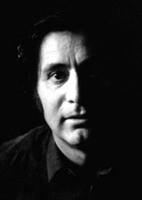
Alfred Schnittke
Alfred Garrievich Schnittke (24 November 1934 – 3 August 1998) was a Soviet and Russian composer. Among the most performed and recorded composers of late 20th-century classical music, he is described by musicologist Ivan Moody as a "composer who was concerned in his music to depict the moral and spiritual struggles of contemporary man in [...] depth and detail."
Schnittke's early music shows the strong influence of Dmitri Shostakovich. He developed a polystylistic technique in works such as the epic Symphony No. 1 (1969–1972) and his first concerto grosso (1977). In the 1980s, Schnittke's music began to become more widely known abroad with the publication of his second (1980) and third (1983) string quartets and the String Trio (1985); the ballet Peer Gynt (1985–1987); the third (1981), fourth (1984), and fifth (1988) symphonies; and the viola concerto (1985) and first cello concerto (1985–1986). As his health deteriorated, Schnittke's music started to abandon much of the extroversion of his polystylism and retreated into a more withdrawn, bleak style.
-
Poulenc: Thème varié, FP 151: Variation III. Pastorale - Scenes of Pastoral Life -
Alfred Schnittke
-
Mondonville: Titon et l'Aurore, Op. 7, Act 1, Scene 3: Air pour les pâtres - Scenes of Pastoral Life -
Alfred Schnittke
-
Ibert: Pastorale - Scenes of Pastoral Life -
Alfred Schnittke
-
Chopin: Mazurka No. 34 in C Major, Op. 56 No. 2 - Scenes of Pastoral Life -
Alfred Schnittke
-
Campra: Tancrède, Acte 3: "Chantons dans ces belles retraites" (Chœur) - Scenes of Pastoral Life -
Alfred Schnittke
-
Wiéner: Histoires sans paroles: No. 9, Bucolique - Scenes of Pastoral Life -
Alfred Schnittke
-
Francoeur: Simphonie du festin royal de Monseigneur le comte d'Artois, Quatrième suite: VI. Musette (D'après de Mondonville) - Scenes of Pastoral Life -
Alfred Schnittke
-
Palmgren: Paimenen ilo - Scenes of Pastoral Life -
Alfred Schnittke
-
Lutosławski: Folk Melodies: No. 4, The Shepherd Girl (Arr. Bream for Guitar) - Scenes of Pastoral Life -
Alfred Schnittke
-
Lalande: Simphonies pour le souper du Roy, Suite No. 4: Musette du ballet de l'Inconnu - Scenes of Pastoral Life -
Alfred Schnittke
-
Costeley: Musique: No. 48, Quand le berger vit la bergère - Scenes of Pastoral Life -
Alfred Schnittke
-
Dutilleux: Bergerie (Extrait du "Jardin d'enfants") - Scenes of Pastoral Life -
Alfred Schnittke
-
Charpentier: In nativitatem Domini canticum, H. 416: IX. Marche des bergers - Scenes of Pastoral Life -
Alfred Schnittke
-
Leclair: Scylla et Glaucus, Op. 11, Act 1: Annonce de la fête - "Nos bergers, nos silvains approchent de ces lieux" (Scylla) - Scenes of Pastoral Life -
Alfred Schnittke
-
Elgar: The Sanguine Fan, Op. 81: Pan Enters Piping, Then Curls up to Sleep - Scenes of Pastoral Life -
Alfred Schnittke
-
Antonacci: Sinfonia pastorale in G Major: I. Allegro - Scenes of Pastoral Life -
Alfred Schnittke
-
Rebel: Les caractères de la danse: XIII. Musette - Scenes of Pastoral Life -
Alfred Schnittke
-
Rameau: Les fêtes d'Hébé, Act 3: Musette - Scenes of Pastoral Life -
Alfred Schnittke
-
Marais: Suite d'Alcyone: Bourrée pour les bergers et les bergères - Scenes of Pastoral Life -
Alfred Schnittke
-
Yost: Little Duet for Two Clarinets No. 2 in F Major: II. Rondo. Allegretto pastorale - Scenes of Pastoral Life -
Alfred Schnittke
-
Susato: Het derde musyck boexken "Danserye" No. 5, Bergerette - Scenes of Pastoral Life -
Alfred Schnittke
-
Delius: Brigg Fair "An English Rhapsody": Introduction. Slow, Pastoral - Scenes of Pastoral Life -
Alfred Schnittke
-
Gluck: Orphée et Eurydice, Wq. 41, Act 1: Pantomime des nymphes et des bergers - Scenes of Pastoral Life -
Alfred Schnittke
-
Tchaikovsky: The Seasons, Op. 37a: No. 7, July. Reaper's Song - Scenes of Pastoral Life -
Alfred Schnittke
-
Anonymous: Très brève et familière introduction: Une bergerotte - Scenes of Pastoral Life -
Alfred Schnittke
-
Offenbach: Orphée aux enfers, Act 1: Ballet pastoral - Scenes of Pastoral Life -
Alfred Schnittke
-
Lully: George Dandin, LWV 38 "Le grand divertissement royal de Versailles": Air pour les bergers - Scenes of Pastoral Life -
Alfred Schnittke
-
Mozart: Bastien und Bastienne, K. 50: Intrada - Scenes of Pastoral Life -
Alfred Schnittke
-
Stravinsky: Pastorale - Scenes of Pastoral Life -
Alfred Schnittke
-
Chédeville: Il pastor fido, Op. 13, Recorder Sonata No. 6 in G Major: II. Alla breve (Formerly Attributed to Vivaldi as RV 57) - Scenes of Pastoral Life -
Alfred Schnittke
-
Gounod: Mireille, Act 4: "Heureux petit berger" (Mireille) - Scenes of Pastoral Life -
Alfred Schnittke
-
Schumann: Waldszenen, Op. 82: No. 6, Herberge - Scenes of Pastoral Life -
Alfred Schnittke
-
Järnefelt: Paimenten ilo - Scenes of Pastoral Life -
Alfred Schnittke
-
Grainger: Shepherd's Hey - Scenes of Pastoral Life -
Alfred Schnittke
-
Grieg: 2 Nordic Melodies, Op. 63: No. 2a, Cattle Call - Scenes of Pastoral Life -
Alfred Schnittke
-
Tomkins: Songs of 3, 4, 5 and 6 Parts: No. 4, See, See the Shepherds' Queen - Scenes of Pastoral Life -
Alfred Schnittke
-
Parry: An English Suite: V. Pastoral - Scenes of Pastoral Life -
Alfred Schnittke
-
Brahms / Orch. Hidas: 21 Hungarian Dances, WoO 1: No. 3 in F Major - Scenes of Pastoral Life -
Alfred Schnittke
-
Morley: Madrigals to Four Voices: No. 17, Hark Jolly Shepherds - Scenes of Pastoral Life -
Alfred Schnittke
-
Tansman: Musique de cour d'après Robert de Visée: IV. Gavotte et Musette - Scenes of Pastoral Life -
Alfred Schnittke
-
Bliss: Pastoral "Lie Strewn the White Flocks": Pan's Saraband - Scenes of Pastoral Life -
Alfred Schnittke
-
Lambert: Ma bergère est tendre et fidèle - Scenes of Pastoral Life -
Alfred Schnittke
-
Dandrieu: Livre de noëls: No. 17, Noël de Saintonge "Nos bergers" - Scenes of Pastoral Life -
Alfred Schnittke
-
Sibelius: 6 Pieces, Op. 94: No. 4, Berger et bergerette - Scenes of Pastoral Life -
Alfred Schnittke
-
Kilpinen: Kanteletar-lauluja, Op. 100: No. 1, Shepherd's Song - Scenes of Pastoral Life -
Alfred Schnittke
-
Britten: Six Metamorphoses After Ovid, Op. 49: No. 1, Pan - Scenes of Pastoral Life -
Alfred Schnittke
-
Telemann: Tafelmusik, Pt. 3, No. 1, Ouverture-Suite in B-Flat Major, TWV 55:B1: II. Bergerie. Un peu vivement - Scenes of Pastoral Life -
Alfred Schnittke
-
Wolf: Goethe-Lieder: No. 22, Der Schäfer - Scenes of Pastoral Life -
Alfred Schnittke
-
Handel: Messiah, HWV 56, Pt. 1: Pastoral Symphony "Pifa" - Scenes of Pastoral Life -
Alfred Schnittke
-
Madetoja: Songs for Female Choir, Op. 28: No. 2, Evening Falling on the Pastures - Scenes of Pastoral Life -
Alfred Schnittke
-
Ginastera: Estancia, Op. 8a: I. Los trabajadores agricolas - Scenes of Pastoral Life -
Alfred Schnittke
-
Zipoli: Sonate d'intavolatura per organo, Op. 1: Pastorale - Scenes of Pastoral Life -
Alfred Schnittke
-
Sonata for Violin and Piano No. 1 in F Minor, Op. 80: I. Andante assai - Prokofiev — Pärt — Schnittke -
Alfred Schnittke
-
Sonata for Violin and Piano No. 1 in F Minor, Op. 80: II. Allegro brusco - Prokofiev — Pärt — Schnittke -
Alfred Schnittke
-
Sonata for Violin and Piano No. 1 in F Minor, Op. 80: III. Andante - Prokofiev — Pärt — Schnittke -
Alfred Schnittke
-
Sonata for Violin and Piano No. 1 in F Minor, Op. 80: IV. Allegrissimo - Prokofiev — Pärt — Schnittke -
Alfred Schnittke
-
Spiegel im Spiegel - Prokofiev — Pärt — Schnittke -
Alfred Schnittke
-
5 Mélodies for Violin and Piano, Op. 35a: No. 1, Andante - Prokofiev — Pärt — Schnittke -
Alfred Schnittke
-
5 Mélodies for Violin and Piano, Op. 35a: No. 2, Lento, ma non troppo - Prokofiev — Pärt — Schnittke -
Alfred Schnittke
-
5 Mélodies for Violin and Piano, Op. 35a: No. 3, Animato, ma non allegro - Prokofiev — Pärt — Schnittke -
Alfred Schnittke
-
5 Mélodies for Violin and Piano, Op. 35a: No. 4, Allegretto leggero e scherzando - Prokofiev — Pärt — Schnittke -
Alfred Schnittke
-
5 Mélodies for Violin and Piano, Op. 35a: No. 5, Andante non troppo - Prokofiev — Pärt — Schnittke -
Alfred Schnittke
-
Gratulationsrondo - Prokofiev — Pärt — Schnittke -
Alfred Schnittke
-
Little Tragedies, Chapter 1: Theme Music - Schnittke: Film Music, Vol. 6 -
Alfred Schnittke
-
Little Tragedies, Prologue "Faust-Szene": Beach - Schnittke: Film Music, Vol. 6 -
Alfred Schnittke
-
Little Tragedies, Prologue "Faust-Szene": Barcarole - Schnittke: Film Music, Vol. 6 -
Alfred Schnittke
-
Little Tragedies, Prologue "Faust-Szene": Explosion - Schnittke: Film Music, Vol. 6 -
Alfred Schnittke
-
Little Tragedies, Chapter 2 "Egyptian Nights": Petersburg - Schnittke: Film Music, Vol. 6 -
Alfred Schnittke
-
Little Tragedies, Chapter 2 "Egyptian Nights": Waltz No. 1 - Schnittke: Film Music, Vol. 6 -
Alfred Schnittke
-
Little Tragedies, Chapter 2 "Egyptian Nights": Polka - The Coffinmaker - Schnittke: Film Music, Vol. 6 -
Alfred Schnittke
-
Little Tragedies, Chapter 2 "Egyptian Nights": Waltz No. 2 - Schnittke: Film Music, Vol. 6 -
Alfred Schnittke
-
Little Tragedies, Chapter 2 "Egyptian Nights": The Improviser - Schnittke: Film Music, Vol. 6 -
Alfred Schnittke
-
Little Tragedies, Chapter 2 "Egyptian Nights": Evocation - Schnittke: Film Music, Vol. 6 -
Alfred Schnittke
-
Little Tragedies, Chapter 2 "Egyptian Nights": Egyptian Nights - Schnittke: Film Music, Vol. 6 -
Alfred Schnittke
-
Little Tragedies, Chapter 3 "The Miserly Knight": Awakening - Schnittke: Film Music, Vol. 6 -
Alfred Schnittke
-
Little Tragedies, Chapter 3 "The Miserly Knight": Theme Music - Schnittke: Film Music, Vol. 6 -
Alfred Schnittke
-
Little Tragedies, Chapter 4 "Mozart and Salieri": Salieri's Day - Schnittke: Film Music, Vol. 6 -
Alfred Schnittke
-
Little Tragedies, Chapter 4 "Mozart and Salieri": Waltz - Schnittke: Film Music, Vol. 6 -
Alfred Schnittke
-
Little Tragedies, Chapter 4 "Mozart and Salieri": Mozart's Improvisation - Schnittke: Film Music, Vol. 6 -
Alfred Schnittke
-
Little Tragedies, Chapter 4 "Mozart and Salieri": Contradance - Schnittke: Film Music, Vol. 6 -
Alfred Schnittke
-
Little Tragedies, Chapter 4 "Mozart and Salieri": Fantasy - Schnittke: Film Music, Vol. 6 -
Alfred Schnittke
-
Little Tragedies, Chapter 4 "Mozart and Salieri": Chaos - Schnittke: Film Music, Vol. 6 -
Alfred Schnittke
-
Little Tragedies, Chapter 5 "The Stone Guest": Second Improvisation - Schnittke: Film Music, Vol. 6 -
Alfred Schnittke
-
Little Tragedies, Chapter 5 "The Stone Guest": Corrida - Schnittke: Film Music, Vol. 6 -
Alfred Schnittke
-
Little Tragedies, Chapter 5 "The Stone Guest": Laura's First Song - Schnittke: Film Music, Vol. 6 -
Alfred Schnittke
-
Little Tragedies, Chapter 5 "The Stone Guest": Night - Schnittke: Film Music, Vol. 6 -
Alfred Schnittke
-
Little Tragedies, Chapter 5 "The Stone Guest": Laura's Second Song - Schnittke: Film Music, Vol. 6 -
Alfred Schnittke
-
Little Tragedies, Chapter 5 "The Stone Guest": Komtur's Footsteps - Schnittke: Film Music, Vol. 6 -
Alfred Schnittke
-
Little Tragedies, Chapter 5 "The Stone Guest": Theme Music - Schnittke: Film Music, Vol. 6 -
Alfred Schnittke
-
Little Tragedies, Chapter 5 "The Stone Guest": Komtur - Schnittke: Film Music, Vol. 6 -
Alfred Schnittke
-
Little Tragedies, Chapter 5 "The Stone Guest": Don Juan's Death - Schnittke: Film Music, Vol. 6 -
Alfred Schnittke
-
Little Tragedies, Chapter 6 "A Feast in Time of Plague": Last Improvisation - Schnittke: Film Music, Vol. 6 -
Alfred Schnittke
-
Little Tragedies, Chapter 6 "A Feast in Time of Plague": Pestilential Miasma - Schnittke: Film Music, Vol. 6 -
Alfred Schnittke
-
Little Tragedies, Chapter 6 "A Feast in Time of Plague": Pest - Schnittke: Film Music, Vol. 6 -
Alfred Schnittke
-
Little Tragedies, Chapter 6 "A Feast in Time of Plague": Mary's Song - Schnittke: Film Music, Vol. 6 -
Alfred Schnittke
-
Little Tragedies, Chapter 6 "A Feast in Time of Plague": Intermezzo - Schnittke: Film Music, Vol. 6 -
Alfred Schnittke
-
Little Tragedies, Chapter 6 "A Feast in Time of Plague": Gigue - Schnittke: Film Music, Vol. 6 -
Alfred Schnittke
-
Little Tragedies, Chapter 6 "A Feast in Time of Plague": Walsingham's Hymn - Schnittke: Film Music, Vol. 6 -
Alfred Schnittke
-
Little Tragedies, Chapter 6 "A Feast in Time of Plague": Apotheosis - Schnittke: Film Music, Vol. 6 -
Alfred Schnittke
Similar Artists